
Andrew Loomis, born 1917, emerged as a pivotal figure in American illustration. His blend of classical training and modern narrative techniques shaped a generation of artists. Loomis’s works, celebrated for clarity and structure, continue to inspire both students and professionals worldwide
Early Life and Education
Growing up amid the early twentieth century, Loomis found solace in sketching the city’s evolving skyline, turning everyday scenes into studies of light, shadow, and geometry. His formal education began at the St. Louis School of Fine Arts, where he was mentored by the painter and teacher, Howard P. Smith. Smith’s emphasis on disciplined observation the fundamentals of drawing left an indelible mark on Loomis’s developing style. In 1935, Loomis enrolled at the Art Institute of Chicago, a decision that would broaden his artistic horizons and expose him to a diverse array of techniques. While at the Institute, he studied under the guidance of the celebrated illustrator and educator, William H. G. Smith, who introduced him to the principles of composition and narrative illustration. Loomis’s time in Chicago was also defined by his participation in the vibrant local art community, where he collaborated with peers on public murals and commercial projects, further refining his skill set. After completing his studies, Loomis served in the United States Army during World War II, a period that interrupted his artistic pursuits but also provided him with a unique perspective on human experience and resilience. Upon returning to civilian life, he pursued a career in commercial illustration, eventually securing a position with the prestigious advertising agency, McCann Erickson. It was here that Loomis began to develop the clear, structured approach that would later become the hallmark of his instructional books.
Artistic Influences
Andrew Loomis’s artistic voice emerged from a blend of classical masters and contemporary illustrators. While studying at the Art Institute of Chicago, he absorbed Caravaggio’s chiaroscuro and Raphael’s balanced compositions, using reproductions to master anatomy and proportion. The Renaissance focus on human musculature, especially Leonardo da Vinci’s studies, became a foundation for Loomis’s clear, structured approach. In the 1940s, advertising’s rise introduced him to Norman Rockwell’s narrative realism, whose emphasis on gesture and focal clarity shaped his teaching. Modernist influences—Picasso’s cubism and M. C. Escher’s geometric forms—encouraged simplification of complex subjects. The era’s commercial illustrators, like Charles Dana Gibson and Al Hirschfeld, further refined Loomis’s caricature techniques. Together, these traditions forged a pedagogical style that prized clarity, proportion, and the translation of three‑dimensional form onto a two‑dimensional plane.
The pulp magazine era’s bold covers taught Loomis the power of dramatic composition and color to capture attention. He studied Frank R. Paul and Howard Pyle, learning to balance narrative urgency with artistic integrity. In the 1950s, television’s demand for dynamic visuals pushed Loomis to simplify complex scenes into clear sketches, a technique that became a staple in his books. Influences from John Ruskin’s moral purpose of art and the Bauhaus’s unity of form and function further shaped his pedagogical voice, blending rigorous technique with intuitive visual storytelling —legacy endures.
Major Published Works
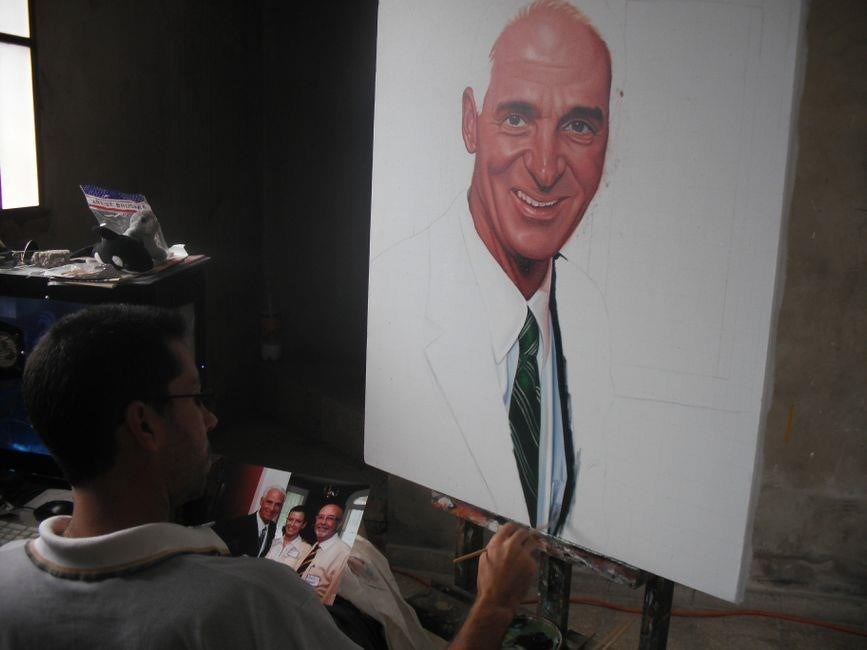
Andrew Loomis’s key works democratized illustration: “Drawing for the Absolute Beginner” (1949) simplifies anatomy, while “The Elements of Drawing” (1962) refines form, perspective, and composition. His diagram‑rich style remains essential for students worldwide. Its legacy thrives in curricula!.
“Drawing for the Absolute Beginner”
Andrew Loomis’s 1949 classic, “Drawing for the Absolute Beginner,” remains a cornerstone for aspiring artists worldwide. The book opens with a concise primer on basic shapes, gradually building into complex forms while emphasizing proportion, perspective, and light. Loomis’s step‑by‑step approach demystifies anatomy, offering clear diagrams of the human head, torso, and limbs. Each chapter concludes with practical exercises that reinforce concepts, encouraging readers to apply theory directly to their drawings. The text is interspersed with illustrative sketches that showcase the evolution of a simple outline into a polished figure, demonstrating how light, shadow, and volume transform flat shapes into three‑dimensional objects. Loomis also introduces the “rule of thirds” and the use of reference photos, guiding students to observe and translate real‑world details onto paper. The book’s enduring popularity stems from its accessibility; it balances technical rigor with engaging, conversational language, making complex ideas approachable for beginners. Many contemporary illustrators cite this work as the foundation of their training, and it continues to be a staple in art school curricula and online tutorials. Whether you’re sketching cartoons, character designs, or realistic portraits, Loomis’s clear instructions and visual examples provide a reliable roadmap for mastering the fundamentals of drawing. Its PDF editions preserve the original layout, ensuring that learners can study the material on any device without losing the integrity of Loomis’s instructional design.
“The Elements of Drawing”
Andrew Loomis’s 1963 masterwork, “The Elements of Drawing,” is revered for its systematic exploration of form, proportion, and perspective. The book is organized into clear, progressive chapters that dissect the anatomy of the human figure, the geometry of objects, and the principles of light and shadow. Loomis introduces the “rule of thirds” and the concept of the “center of gravity,” guiding readers to balance composition with mathematical precision. Each section is illustrated with detailed sketches, step‑by‑step diagrams, and annotated notes that reveal how a simple outline can evolve into a realistic, volumetric representation. The text emphasizes the importance of observation, encouraging artists to study live models and reference photographs to capture accurate proportions. Loomis also devotes a section to the “face” and “body” as a unified system, demonstrating how to translate complex musculature into manageable shapes. The book’s pedagogical style blends concise explanations with practical exercises, allowing beginners to test concepts immediately. The book’s PDF editions preserve the original layout, making the content accessible on tablets, laptops, and smartphones. Many contemporary illustrators and educators cite this volume as a foundational text, and it remains a staple in art school curricula and online drawing courses. By mastering Loomis’s systematic approach, artists gain a toolkit for creating convincing, dynamic figures that resonate with realism and artistic intent.
In the digital era, the PDF version of “The Elements of Drawing” is widely shared across educational forums, offering high‑resolution scans of Loomis’s original illustrations. Artists often use these PDFs as reference sheets during sketch sessions, overlaying them on digital canvases to trace proportions before committing to final lines. The availability of the PDF has also sparked a resurgence in the book’s popularity, with many online courses integrating Loomis’s lessons into their curricula. Despite the proliferation of free resources, the PDF remains a trusted source for accurate, unaltered content, ensuring that learners receive Loomis’s original pedagogical intent without distortion. Its enduring relevance underscores Loomis’s lasting influence on the art community. Loomis’s guidance inspires now.

Andrew Loomis PDFs: Availability and Access
Andrew Loomis PDFs are accessible through official sites, art libraries, and reputable digital archives. Many libraries offer loaned copies, while online marketplaces sell licensed PDFs. Enthusiasts also share scanned editions on forums, though copyright remains a concern. These PDFs aid study daily.

Official PDF releases of Andrew Loomis titles are distributed through a handful of licensed channels. The most reliable source is the publisher’s own digital storefront, which offers a curated selection of his classic texts—such as “Drawing for the Absolute Beginner,” “The Elements of Drawing,” and “Figure Drawing for the Modern Artist”—in high‑res PDF format. These files are typically accompanied by a digital booklet that explains the licensing terms and provides a short guide on how to use the material for educational purposes.
In addition to the publisher’s site, a number of university libraries now provide institutional access to Loomis’s works via their electronic resource portals. Students and faculty can download the PDFs with a library card or institutional login, ensuring that the material is used within the bounds of copyright law. For those who prefer a more flexible format, a few reputable art‑education platforms offer subscription access to a broader library of Loomis’s works, often bundled with supplementary video tutorials and interactive quizzes. These platforms usually require a paid membership, but they also provide a free trial period during which users can download a limited number of PDFs.

These official releases are safeguarded by digital rights management protocols, ensuring that each copy remains within the legal framework set by the author’s estate, and encouraging responsible use among artists, educators and students worldwide for continued creative growth!.
Archival and Fan-Contributed PDFs
While official releases are tightly controlled, a vibrant community of collectors and enthusiasts has preserved Andrew Loomis’s legacy in the form of archival and fan‑contributed PDFs. These unofficial copies are often sourced from old print runs, personal libraries, or scanned copies of out‑of‑print editions. Many are shared on art forums, private Discord servers, and dedicated fan sites, where users exchange high‑quality scans that preserve the original layout and illustrations. The quality varies: some PDFs retain the crisp line work and color swatches that Loomis used, while others suffer from compression artifacts or missing pages. Despite the legal gray area, the community argues that these copies serve an educational purpose, allowing students who cannot afford official editions to study Loomis’s techniques. Some contributors add marginalia or annotations, providing modern context or linking to supplementary resources. However, the Loomis estate has occasionally issued takedown notices, citing copyright infringement. Users are advised to verify the source and consider the ethical implications before downloading. The archival PDFs also serve as a historical record, capturing variations between editions, such as the 1965 revision of “The Elements of Drawing” that introduced new chapter titles. By preserving these variations, the fan community offers researchers a richer understanding of Loomis’s evolving pedagogical approach. Ultimately, while official PDFs remain the most reliable and legally sound option, the archival and fan‑contributed PDFs continue to play a crucial role in keeping Loomis’s teachings accessible to a global audience of artists, educators, and hobbyists alike.
Content of Loomis PDF Resources
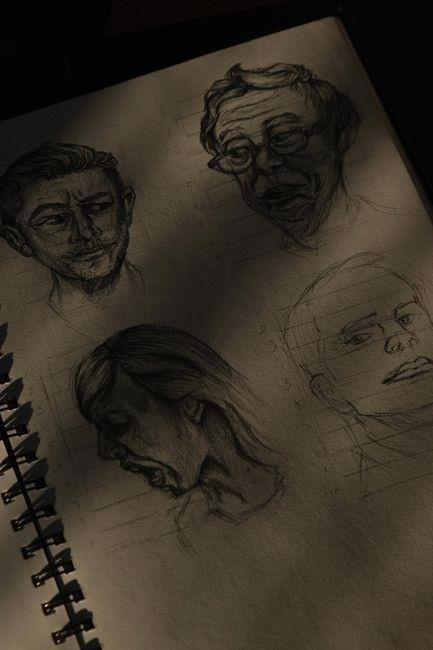
PDFs compile Loomis’s core lessons: foundational drawing, anatomy, perspective, and composition. Each section presents step‑by‑step tutorials, annotated sketches, and practical exercises that illustrate his systematic approach to visual storytelling.
Technical Drawing Techniques
Andrew Loomis’s PDF compendium explores foundational drawing skills, emphasizing geometry, proportion, and light. It starts with basic shapes—cylinders, spheres, cones—illustrated through step‑by‑step construction lines that reveal form from a single viewpoint. Loomis stresses the importance of a “skeleton” of the subject, encouraging artists to reduce complex figures into simple geometric volumes before adding detail. This method ensures accurate spatial relationships and prevents distortion when scaling or repositioning elements.
The guide covers one‑point, two‑point, and three‑point systems, complete with vanishing point diagrams and horizon line placement. Loomis demonstrates how to translate three‑dimensional space onto a two‑dimensional plane, using orthographic grids to maintain consistency across scenes. The PDF includes exercises that ask readers to sketch architectural interiors, reinforcing the practical application of perspective rules.
Lighting and shading are addressed with graduated tone charts and shadow‑mapping techniques. Loomis explains how to model light sources, calculate highlights, midtones, and shadows, and blend them to create volume. He introduces “form shading,” where light direction dictates surface curvature, and provides sample sketches that illustrate the transition from flat to three‑dimensional representation.
Finally, the resource explores composition and gesture. Loomis outlines compositional grids, the rule of thirds, and dynamic line work that conveys movement. He offers guidance on creating strong focal points and balancing elements to guide the viewer’s eye. Each section concludes with practice problems, encouraging hands‑on repetition to internalize the techniques. They help maintain visual rhythm.
Loomis stresses using reference images and observational drawing. He advises artists to capture quick sketches from life, focusing on gesture and rhythm before detail. The PDF offers “quick gesture” exercises that train the hand to capture a pose in a single stroke, essential for dynamic illustration. These exercises reinforce muscle memory and speed. Practice builds confidence.
Human Anatomy and Proportions
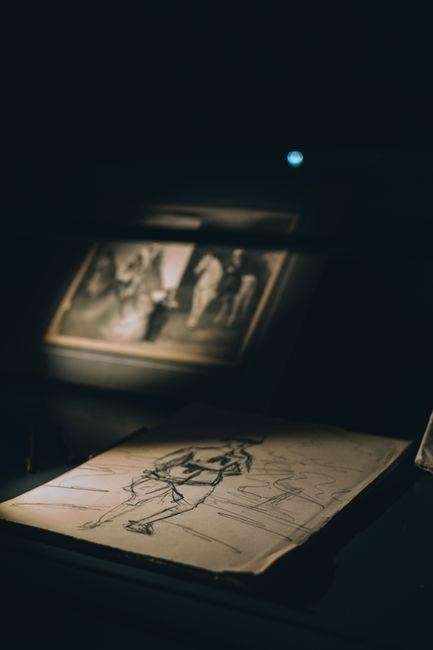
Andrew Loomis’s PDF series dedicates a clear section to human anatomy, framing it as a set of logical, manageable modules. He starts with the “rule of five,” stating the adult torso is roughly five head‑high, a baseline for scaling figures while keeping natural proportions.

Next, Loomis outlines the skeletal framework, showing how the rib cage, spine, and pelvis form a stable base. He introduces “anchor points”—shoulder, elbow, hip—to guide limb placement, ensuring correct length and orientation before adding musculature.
Muscle structure is simplified into volumetric blocks—pectorals, deltoids, quadriceps—then refined with subtle shading. Loomis stresses light direction, providing shading examples that reveal depth from a single light source.
Proportional rules like the “arm span” (arms equal height) and “hand span” (hand equals height) help gauge scale. Loomis offers diagrams to adjust limb length relative to torso height, keeping figures balanced in varied poses.
Throughout, Loomis promotes iterative sketching: outline, add proportions, refine anatomy, finish detail. Practice exercises ask readers to sketch figures from multiple angles, reinforcing proportion rules and internalizing anatomy for complex compositions. By mastering these fundamentals, artists can confidently render complex scenes with anatomical accuracy. Precision in motion follows always and emotion today!OK
Impact and Legacy
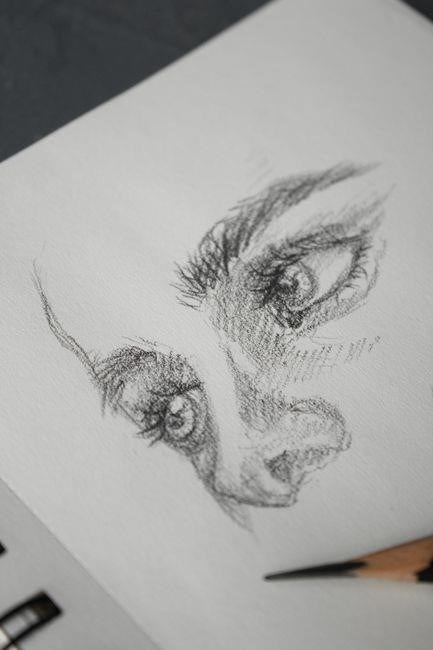
Andrew Loomis’s PDFs continue to shape illustration education, inspiring countless artists worldwide. His clear, step‑by‑step guidance remains a staple in art schools, while online communities cite his methods as foundational. His legacy endures in modern visual storytelling. His teachings shape modern art!!!
Influence on Contemporary Illustrators
Andrew Loomis’s enduring PDFs have become a cornerstone for modern illustrators, offering a bridge between classical anatomy and contemporary visual storytelling. His systematic approach to gesture, proportion, and light is cited by artists working across comics, advertising, and digital media. Many contemporary illustrators credit Loomis for providing a clear, step‑by‑step framework that demystifies complex forms, allowing them to focus on narrative intent rather than technical uncertainty. The PDF collections, freely shared by fan communities and official channels, enable artists worldwide to access Loomis’s lessons without costly textbooks. Online tutorials, forums, and social media groups frequently reference specific pages from “Drawing for the Absolute Beginner” and “The Elements of Drawing,” illustrating how his principles are applied to software like Procreate and Clip Studio Paint. Notably, illustrators such as James R. Eads, known for his dynamic comic art, and Lisa Congdon, celebrated for her vibrant illustration style, have publicly acknowledged Loomis’s influence on their compositional choices and figure drawing techniques. In the digital age, Loomis’s PDFs serve as a living curriculum, continuously updated by community contributions, ensuring that his legacy adapts to evolving artistic tools while preserving the core lessons that define his pedagogical impact. These PDFs remain freely accessible, letting every artist study Loomis’s techniques and adapt them to modern media for growth.
Online Communities and Digital Resources

Digital platforms have transformed the way Loomis’s teachings circulate. Dedicated forums such as the Loomis Forum, the Drawing Academy, and the ArtStation community host thousands of threads where members dissect PDF chapters, share annotated scans, and debate the merits of his proportion charts. These spaces also feature live workshops, where seasoned illustrators demonstrate how to apply Loomis’s “face in a box” technique to 3D modeling software, bridging traditional drawing with modern CGI workflows. Social media channels—particularly Instagram and TikTok—host short tutorials that distill key PDF lessons into bite‑sized videos, often accompanied by downloadable worksheets. Many artists create “Loomis Challenge” series, posting daily prompts that encourage followers to practice specific exercises from the PDFs, fostering a collaborative learning environment. Additionally, open‑source repositories on GitHub host digitized PDFs and supplementary resources such as vectorized anatomy templates and interactive proportion calculators all licensed under Creative Commons. These repositories allow educators to embed Loomis’s content into online courses, while hobbyists can remix the material to suit personal projects. The synergy between PDF accessibility and community-driven content ensures that Loomis’s pedagogical principles remain relevant, adaptable and widely disseminated across both traditional and emerging digital art ecosystems. Join community today.